
Most companies don't just decide to become "human-plus-AI" organizations. It happens eventually - one employee at a time, one ChatGPT tab at a time - long before leadership has a strategy for it. The question isn't whether this shift is coming. It's whether you're managing it or catching up to it.
Across industries, companies are moving from traditional human-centric operating models - where people perform every task manually - towards human-plus-AI operations, where employees and AI systems work together.
This shift does not mean replacing people with machines. The companies making the most progress are not asking, “How can AI remove humans from the process?”
They are asking:
“How can AI handle repetitive work so people can focus on higher-value decisions, relationships, and strategic thinking?”
The difference is important. The success of AI adoption depends less on the technology itself and more on how organizations redesign their workflows, roles, and knowledge systems around it.

Human-plus-AI operations isn't a rebrand for "AI replacing jobs." It's a redesign of how work gets done when AI tools are a standing part of the operating model - supporting employees with tasks like information retrieval, drafting, summarizing, analyzing patterns, and automating repetitive processes.
Humans remain responsible for the areas where judgment, context, creativity, and relationships matter most.
A simple way to think about it: AI handles the repetitive. Humans handle the meaningful.
For example, in an HR team, an AI assistant could answer common employee questions about company policies, benefits, onboarding steps, or leave requests. Instead of spending hours responding to the same questions repeatedly, HR professionals can focus on more complicated work. The goal is not to reduce the value of human expertise. It is to remove the low-value tasks that prevent people from using it.
Companies that introduce AI as a “replacement” create uncertainty and resistance. Companies that position AI as a capability that helps employees do better work create much stronger adoption.
Many organizations expected AI transformation to be a structured technology project led by IT teams. Instead, adoption has happened much more organically. Employees are already using AI tools to write documents, analyze information, create presentations, summarize meetings, and solve everyday problems. In many cases, this is happening before companies have:
This creates a new challenge: AI adoption is already happening - whether organizations are ready or not. McKinsey's research into workplace AI adoption found that C-suite leaders estimate that only four percent of employees use generative AI for at least 30 percent of their daily work, when the real figure - self-reported by employees - is three times higher.
Leaders consistently underestimate how deeply AI has already embedded itself in daily work, because most of that usage happens without their visibility, let alone their approval. The pressure is coming from several directions at once:
The biggest risk is not adopting AI too slowly. It is allowing AI adoption to happen without structure. When employees use unapproved AI tools with company information, organizations lose visibility into where their data goes and how AI is being used. A successful transition requires moving from accidental AI adoption to intentional AI integration.
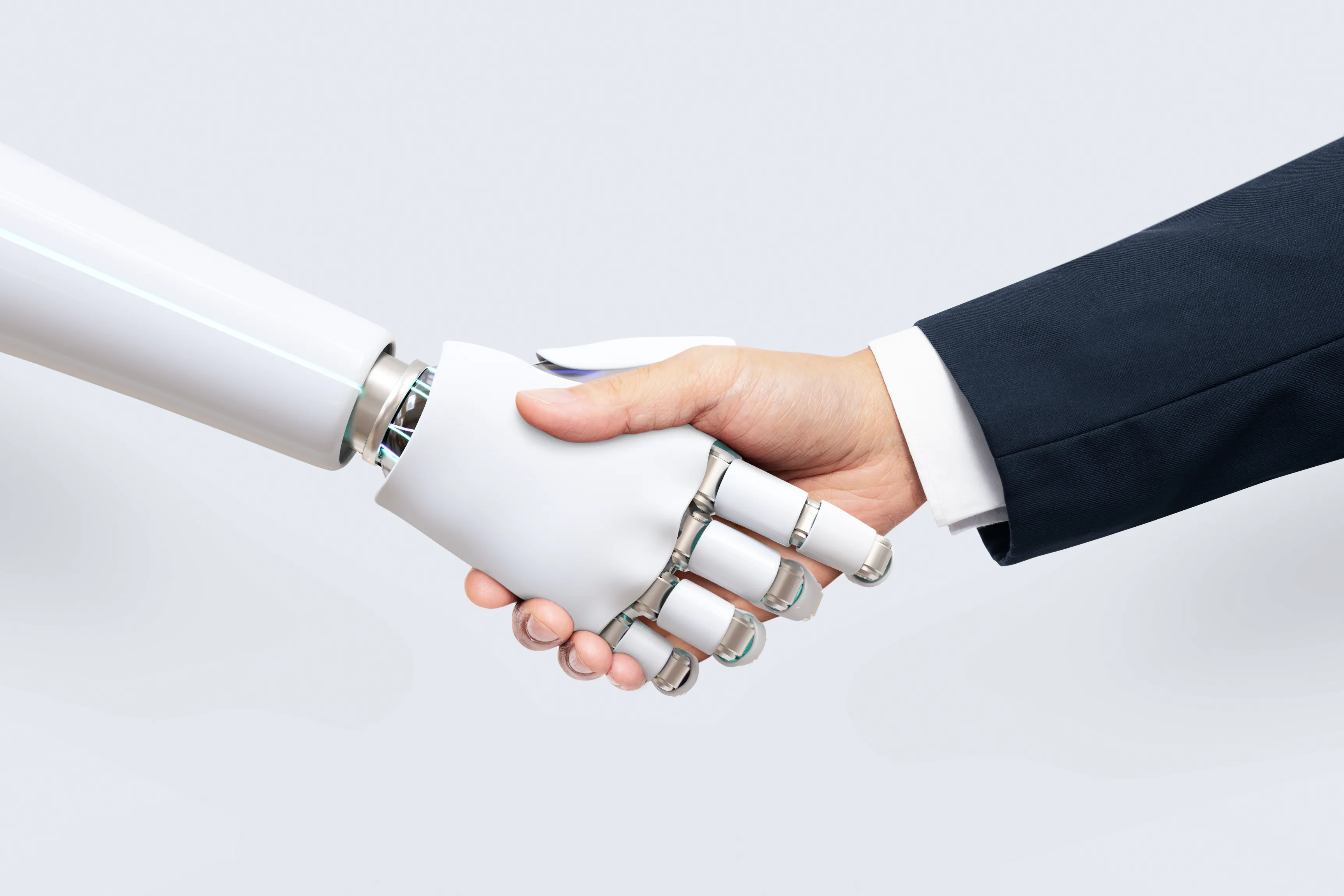
Most organizations are somewhere on a journey from traditional operations to AI-enabled workflows. That journey typically happens in three phases.
The first step is visibility. Companies need to understand what AI tools are actually being used across the organization - official and unofficial - what company data they're touching, and what value, if any, they're generating.
Many organizations are still here. They know AI matters, but they do not yet have a complete picture of how AI fits into daily work. Without this understanding, it is difficult to create effective policies or investment decisions.
In McKinsey's survey, just 1 percent of business leaders describe their organization's AI deployment as having reached maturity, which tells you how early-stage the overall picture still is, even among companies that feel further along.
This is the infrastructure phase, connecting AI tools to company knowledge and processes so the outputs are specific and accurate rather than generic. This is the infrastructure phase, and it's where most transitions quietly stall.
A tool that can't see your actual policies, your actual client history, or your actual past decisions will keep producing answers that sound plausible and aren't useful.
To become genuinely useful, AI needs access to relevant company knowledge in a secure and controlled way.
The most advanced organizations move beyond simply adding AI tools. They redesign workflows around human-plus-AI collaboration. This means redefining roles, changing team structures, measuring outcomes differently, and identifying where human expertise creates the most value.
Few organizations have reached this stage because it requires more than technology. It requires a new approach to how work itself is designed.

AI adoption changes more than tools. It changes how organizations manage people, roles, and performance. Here are some of the things that stop being optional once AI tools become part of daily work:
Here's the part most companies get wrong: they invest in an AI tool, the tool produces generic, slightly off answers, and they conclude the tool isn't good enough. The tool is usually fine. The problem is almost never the AI itself - it's the absence of company-specific knowledge feeding it.
A generic AI assistant doesn't know your company's processes, your clients, your internal terminology, your regulatory obligations, or the decisions your team made eighteen months ago that everyone has since forgotten. Without that context, even the most capable model is just guessing in a confident voice.
What changes when AI has genuine company context is specific. A new hire asking "what's our expense policy?" gets an answer pulled from the company's actual, current policy document - not a plausible-sounding average of every expense policy on the internet. A manager drafting a contract gets the relevant internal precedent surfaced automatically, instead of starting from a blank page.
This is the foundation on which human-plus-AI operations are built. Knowledge management has to come first, because without permission-aware access to company knowledge, AI tools will keep producing generic outputs no matter how sophisticated the underlying model gets.
Cortextual's AI context layer exists specifically to close that gap - connecting AI tools to your actual organizational knowledge so the answers they give are cited, accurate, and grounded in what your company actually does, not what a generic model assumes.
A successful transition requires more than buying AI software. Organizations need to prepare their people, processes, and knowledge infrastructure. Here are the five practical steps, in the order they actually need to happen:
Human-plus-AI operations describe a workplace where AI tools support employees by handling routine tasks like information retrieval, drafting, and data processing, while humans focus on judgment, relationships, and complex decisions.
Companies should start by auditing current AI usage, defining approved tools and policies, mapping where company knowledge exists, and identifying which roles will be most affected. The technology matters, but successful adoption depends on preparing people and processes.
The biggest risk is the knowledge gap. AI tools without company context often produce generic outputs. Organizations need connected, accessible knowledge systems to make AI accurate and useful.
The shift is happening faster than many organizations expected. Many employees are already using AI tools in daily work, meaning the key question for leadership teams is no longer whether AI adoption will happen, but how to manage it responsibly.

Your hub for research, frameworks, and practical guidance on workforce transition, organizational knowledge, AI adoption and more.