
The modern workplace is undergoing a fundamental shift. As organizations evolve into integrated teams of humans and AI, leadership faces a multifaceted challenge: how do you simultaneously manage personnel transitions, safeguard institutional knowledge, and budget for evolving roles?
Navigating this new level of complexity requires an entirely different kind of infrastructure. If you are a CEO, COO, or HR leader, you already know that spreadsheets and disjointed software are no longer equipped to handle this structural change. In this blog, we’re giving a comprehensive guide to what a workforce transition platform is, why the category is emerging right now, and whether your organization needs one.
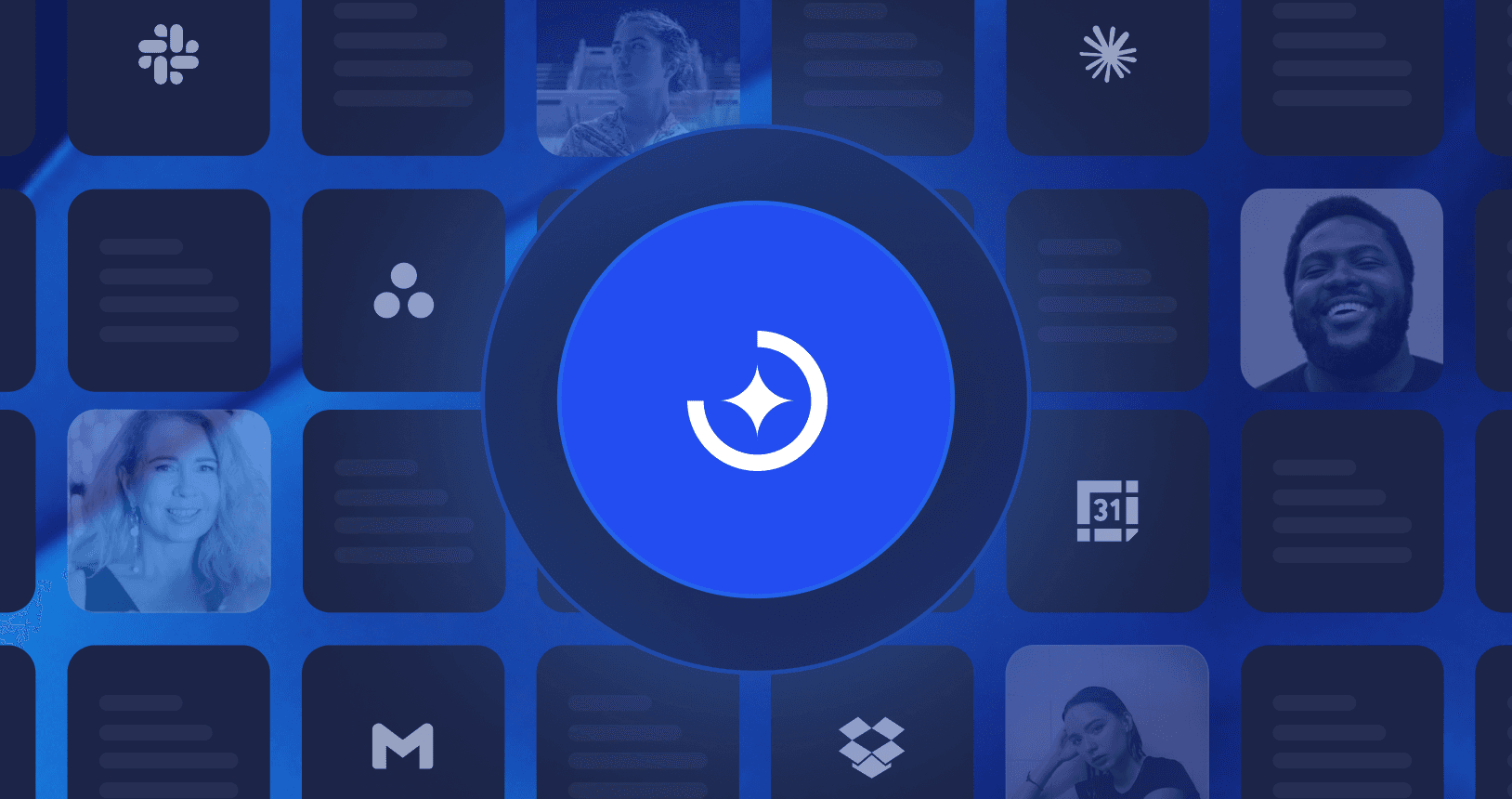
A workforce transition platform is software that helps organizations manage the structural, knowledge, and operational changes that come with transitioning from human-only to human-plus-AI teams.
Instead of isolating HR data from company know-how, a workforce transition platform addresses three critical elements simultaneously:
Historically, businesses have tried to manage these challenges using fragmented solutions. Traditional knowledge management tools store documents. Org chart software draws static diagrams of reporting lines. Workforce planning tools crunch payroll numbers.
The problem? They solve these issues independently. A workforce transition platform is the first category to address all three together in a single, integrated view, allowing leaders to see the exact intersection of their people, what they know, and what they cost.

The AI wave has created a new category of operational challenge. As businesses rapidly integrate generative AI and agentic workflows, leaders are left asking: How do you restructure, reskill, and reorganize a workforce while ensuring that institutional knowledge is preserved, and AI tools have the company context they need to be genuinely useful?
The timing of this category's emergence is not a coincidence. Organizations are now far enough into their AI adoption journeys to feel the sharp gap between what legacy tools offer and what a successful AI transition actually requires. For instance, McKinsey’s State of AI in 2025 report revealed that while 88% of organizations now use AI, only a fraction consider their deployments truly mature. Companies are experimenting heavily, but scaling AI successfully requires deep organizational redesign.
The friction companies are experiencing right now is largely due to software that was built for the previous decade of work:
A workforce transition platform bridges these gaps, providing the exact infrastructure needed to survive and thrive in the era of human-plus-AI collaboration.
To understand the value of this new category, you have to look at its core capabilities. A true workforce transition platform acts as the central nervous system for organizational change. Here is what it does in practice:
A workforce transition platform connects directly to your existing work tools, email, Slack, Google Drive, project management software, and makes institutional knowledge searchable without requiring manual documentation. By capturing knowledge exactly where it already lives, it eliminates the need for employees to waste time updating stagnant wikis.
The platform provides a dynamic view of the current organization. But unlike a standard org chart, it layers on critical data: It shows the knowledge each role carries, the cost of each position, and what proposed change scenarios would look like. You can model out structural shifts and see the ripple effects before any irreversible decisions are made.
Finance and HR leaders no longer have to guess or rely on spreadsheets to understand the cost of a pivot. The platform surfaces the immediate and downstream cost implications of workforce decisions, including termination costs, backfill costs, and the often-hidden "knowledge replacement costs," ensuring decisions are made with full financial visibility.
Perhaps most importantly for the modern enterprise, it acts as a contextual bridge for artificial intelligence. A workforce transition platform provides AI tools with your specific company knowledge. This ensures that when your employees prompt an AI, its outputs reflect your organization's actual processes, history, and context, rather than generic, scraped-from-the-internet best practices.

Not every business requires a dedicated platform for workforce transitions, but for companies in specific phases of growth or transformation, it is quickly becoming indispensable. You likely need a workforce transition platform if you fall into any of the following categories:
Because both categories deal with company information, it is easy to confuse a workforce transition platform with a traditional knowledge management system (KMS). However, their purposes and capabilities are fundamentally different.
A knowledge management system is primarily a repository. It stores and organizes knowledge, makes it searchable, and helps employees find the information they are looking for. It is passive; it waits for human input and human retrieval.
A workforce transition platform, on the other hand, is active and connected. It links knowledge directly to the org structure, surfaces the risk and cost implications of workforce decisions, and actively feeds AI tools the company context they need to work effectively.
The simplest distinction: > A KMS answers the question, "Where is this information?" > A workforce transition platform answers the question, "What happens to our knowledge, our structure, and our costs if we make this workforce decision?"
If you are evaluating software to guide your organization through the transition to an AI-augmented workforce, you need to look past flashy dashboards and focus on core functionality. Here are the non-negotiables:
Cortextual was built specifically to define and lead this category. By seamlessly linking your knowledge sources, organizational structure, and financial realities, Cortextual ensures that your transition to a human-plus-AI workforce is smooth, secure, and strategically sound. You don't have to navigate the future of work blindfolded. With Cortextual, you finally have the visibility to build the workforce of tomorrow, today.
Think of the workforce transition platform as the operating system for your company's evolution. It’s a specialized software category designed to guide businesses as they shift from traditional setups to hybrid, AI-integrated teams. The platform works by tying together your fragmented internal data, mapping out your organizational chart alongside payroll costs, and injecting your unique company DNA into your AI tools so they function effectively.
While a knowledge management system (KMS) acts as a passive library to help staff locate static files, a workforce transition platform is dynamic. It directly connects your institutional data to your reporting structures and financial modeling. If a KMS tells you where a document lives, a workforce transition platform tells you what happens to your team's capability and budget if the person who wrote that document leaves or changes roles.
Mid-market businesses (roughly 50 to 500 staff members) that are scaling up, reorganizing, or rolling out AI initiatives are the primary candidates. It is particularly crucial for companies relying heavily on a few key experts for institutional memory, as well as for operational and HR leaders who are currently forced to plan team restructures without clear data on the resulting financial and knowledge-loss risks.
You likely need one if you are experiencing any of these common pain points: your onboarding process is inefficient because new employees can't find existing resources; losing a senior team member halts production; past reorganizations resulted in unexpected blind spots; your current AI applications deliver bland, unhelpful results; or your leadership team has to manually cross-reference spreadsheets just to understand the financial impact of a single role change.
Your hub for research, frameworks, and practical guidance on workforce transition, organizational knowledge, AI adoption and more.